Blog
Hydraulic Thumbs, Buckets and Quick Couplers Explained

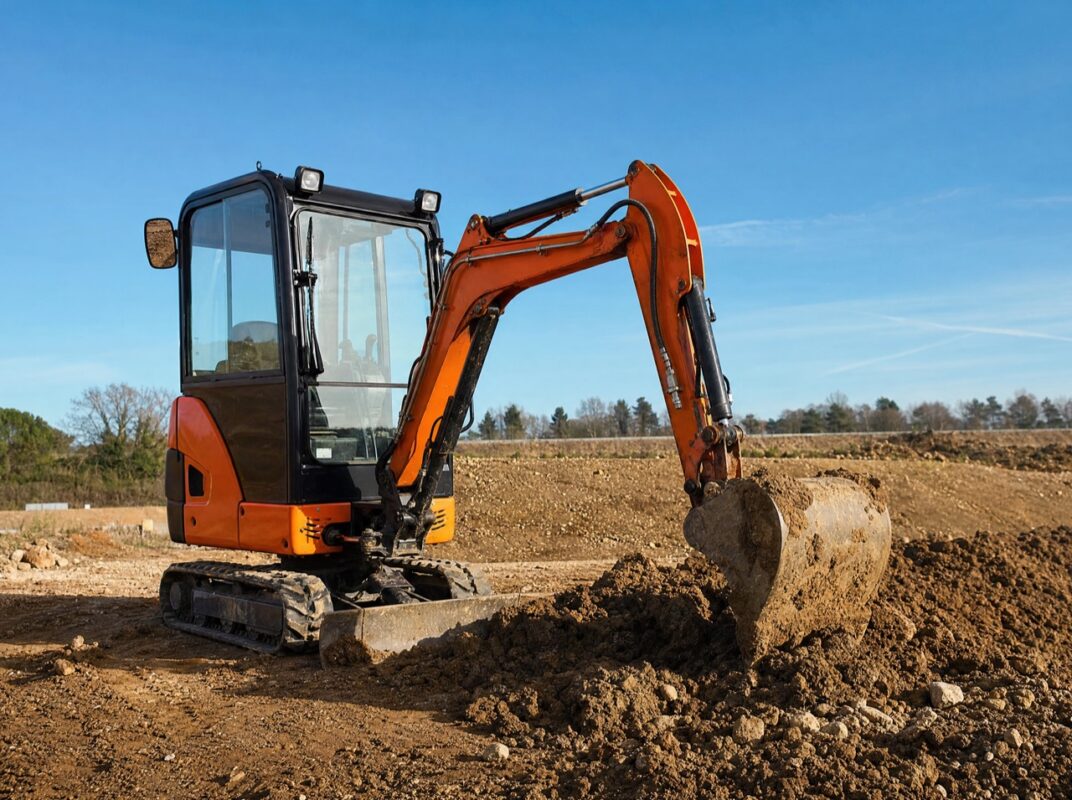
A mini excavator is only as capable as the tools on the end of its arm. Hydraulic thumbs, buckets and quick couplers are the three pieces of equipment that turn a single machine into a grading, digging, lifting and material-handling workhorse. If you understand how each one works and when to use it, you will dig faster, handle awkward loads safely, and switch jobs in seconds instead of minutes. This guide breaks down hydraulic thumbs, buckets and quick couplers in plain language so you can build the right setup for your work.
Buckets: the foundation of every mini excavator
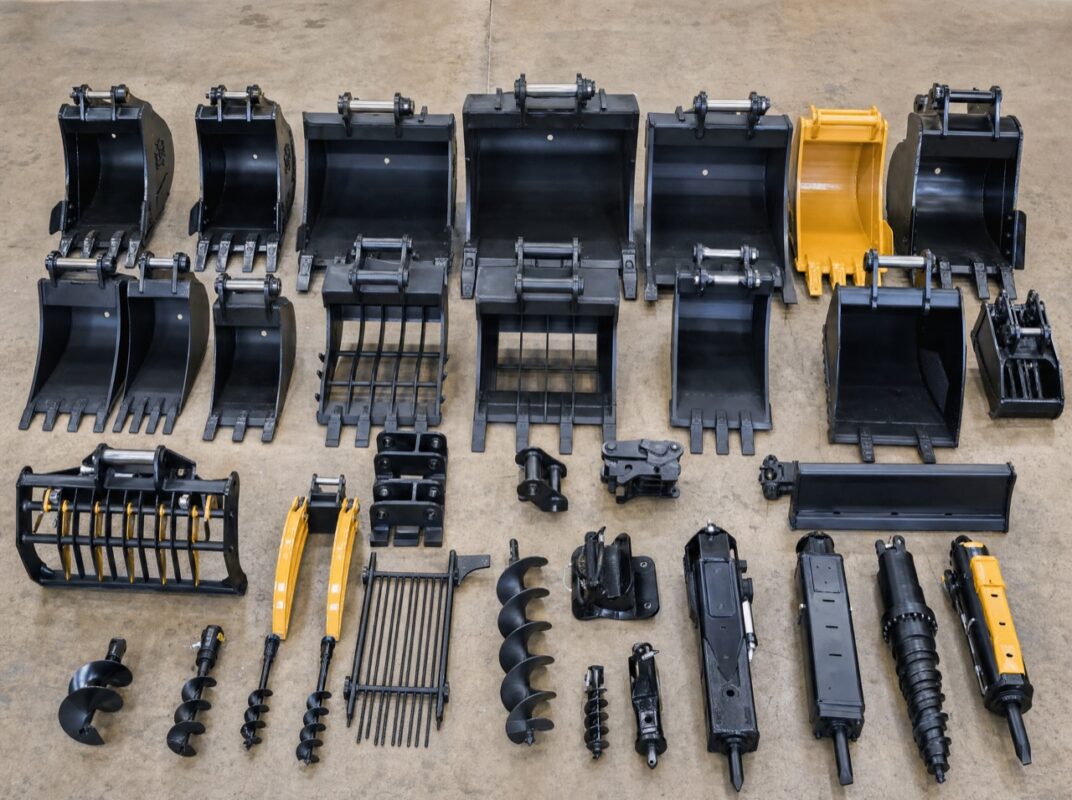
The bucket is the default attachment and the one you will use most. Most compact machines ship with a general-purpose digging bucket, but the right bucket depends entirely on the soil and the task. Matching width and profile to the job is the single easiest way to get more done per hour.
Common bucket types and what they are for
- Digging (general-purpose) bucket: A medium-width bucket with teeth for trenching, footings and everyday excavation in average soil.
- Trenching bucket: Narrow, often 8 to 16 inches, for clean utility trenches, irrigation lines and footings where you want a precise, tight cut.
- Grading (ditch or clean-up) bucket: Wide and toothless with a smooth cutting edge for finish grading, backfilling, sloping ditches and spreading material.
- Heavy-duty / rock bucket: Reinforced with extra steel and aggressive teeth for rocky ground, frozen soil and demolition spoil.
Two numbers matter when sizing a bucket: width and capacity. A wider bucket moves more material per pass but asks more of the machine’s hydraulics and breakout force, so it can stall in hard ground. Always keep bucket size within the rating for your machine’s operating weight. Worn cutting edges and teeth dramatically reduce digging efficiency, so inspect and replace them as part of routine maintenance. You can compare digging and grading buckets alongside other tools in our full range of mini excavator attachments.
Hydraulic thumbs: turning a digger into a grappler
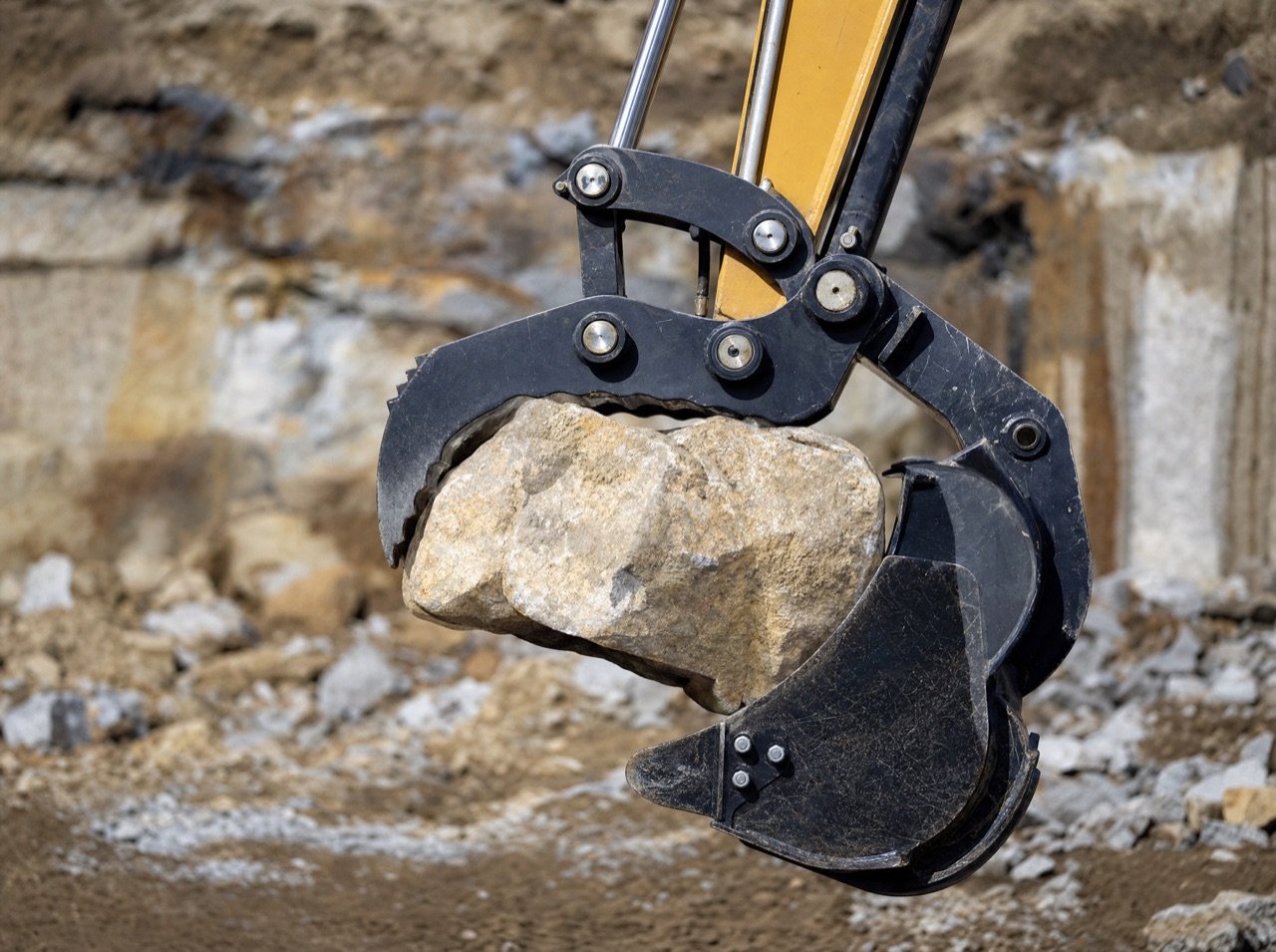
A hydraulic thumb is an opposable clamp mounted on the arm that closes against the bucket, letting the machine grab and hold irregular material the way your thumb works against your fingers. It is one of the most useful upgrades you can add to a compact excavator, and it transforms what the machine can pick up.
What a hydraulic thumb does well
- Picking up logs, brush, rocks, rubble and demolition debris
- Clearing land and stacking tree limbs without leaving the cab
- Placing boulders and landscape stone with control
- Loading awkward scrap that a bucket alone cannot scoop
- Pulling roots and stumps with a controlled grip
Hydraulic vs. mechanical thumbs
A mechanical (manual) thumb is set to fixed positions by hand and is cheaper, but you must leave the cab to adjust it. A hydraulic thumb is powered by an auxiliary hydraulic circuit and pivots smoothly from the cab through its full range, so you can match the opening to whatever you are gripping in real time. For frequent material handling, the hydraulic version pays for itself in saved time. To run one, your machine needs an auxiliary hydraulic line and, ideally, a thumb that is matched to the arm geometry and bucket so the two close cleanly together. Many of the compact machines in our mini excavator lineup are configured with auxiliary hydraulics ready for a thumb.
Quick couplers: change attachments in seconds
A quick coupler (also called a quick hitch or coupler) is the connection between the excavator arm and the attachment. Instead of knocking out pins by hand every time you swap tools, a coupler lets you drop one attachment and pick up another in well under a minute. If you switch between a digging bucket, a grading bucket and a breaker through the day, a coupler is one of the highest-value additions you can make.
Manual vs. hydraulic couplers
- Manual (pin-grabber) coupler: You engage and lock the coupler by hand with a pin or lever. It is affordable and reliable but requires leaving the cab for each change.
- Hydraulic coupler: Operated from the cab with a switch, so you never step out. It is the fastest option and the safest in wet, sloped or unstable conditions where dismounting is risky.
Whichever style you choose, the coupler and the attachment must share a compatible mounting interface, and the pin diameter and spacing have to match. Mixing brands or generations without checking these dimensions is the most common reason a tool will not seat correctly. A good coupler should also include a positive locking mechanism with a visual or audible confirmation that the attachment is secured.
Safety: never skip the lock check
Quick couplers are safe when used correctly, but a dropped attachment is dangerous. Build these habits into every swap, every time.
- Park on level ground and lower the boom before changing any attachment.
- Engage the coupler fully and confirm the lock is seated, not partially engaged.
- Perform a “crowd-back” test: curl the attachment back and tap it against the ground to verify both pins are captured before you lift.
- Keep people clear of the swing radius during the change.
- Inspect pins, locks and hydraulic hoses for wear and leaks before the first lift of the day.
- Grease pivot points and coupler pins on the schedule in your operator’s manual.
This 60-second routine prevents the vast majority of attachment-related incidents and protects both the operator and the machine.
Building the right attachment package
For most owners, a practical starter kit is a general-purpose digging bucket, a wider grading bucket, a quick coupler and a hydraulic thumb. That combination covers trenching, finish grading, land clearing and material handling without overspending on tools you will rarely touch. Add specialty buckets, an auger or a breaker as your jobs demand them. Because every coupler and attachment has to match your specific machine’s pin sizes and hydraulic flow, it is always worth confirming compatibility before you buy; you can review options across the full catalog or reach our team for a quick fitment check.
Frequently asked questions
Can I add a hydraulic thumb to a machine that did not come with one?
Often yes, provided the excavator has, or can be fitted with, an auxiliary hydraulic circuit and the arm geometry suits the thumb. The thumb should be matched to your bucket and pin layout so the two close together cleanly. Confirm your model’s hydraulic capability before ordering.
Are quick couplers universal across all mini excavators?
No. Couplers are sized to specific pin diameters, pin spacing and machine weight classes. An attachment built for one size class will not seat safely on another. Always match the coupler and attachment interface to your exact machine.
Do hydraulic thumbs and couplers reduce digging force?
A well-matched thumb and coupler add a small amount of weight at the end of the arm, which has a minor effect on lift capacity and breakout force. Keeping attachments within your machine’s rated specifications keeps the impact negligible for normal digging and handling.
The bottom line
Hydraulic thumbs, buckets and quick couplers are the attachments that decide how much your mini excavator can actually do. The right buckets let you dig and grade precisely, a hydraulic thumb turns the machine into a grappler for logs, rock and debris, and a quick coupler lets you switch between them in seconds. Match every tool to your machine’s weight class, pin layout and hydraulic flow, follow a disciplined lock-check routine, and you will get safe, productive work for years. When you are ready to outfit your machine, browse our mini excavator attachments and the rest of the full lineup, and reach out if you want help confirming the right fit.