Blog
Trenching and Utility Work with a Mini Excavator

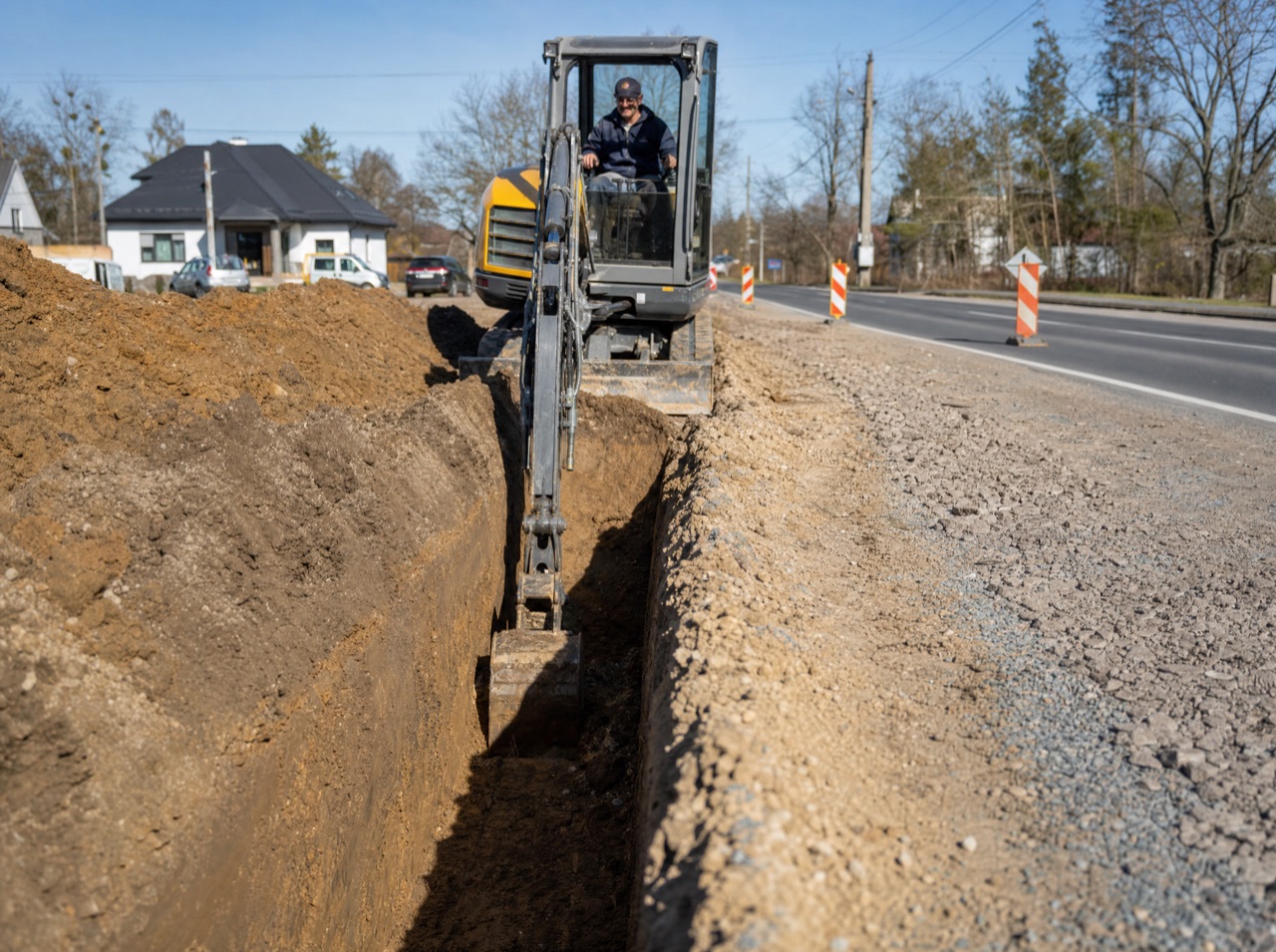
Few jobs reward a compact machine like trenching does. Whether you are running a new water line to a barn, burying electrical conduit to a shop, or installing a French drain along a soggy foundation, trenching and utility work with a mini excavator turns a back-breaking week of hand digging into an afternoon of controlled, precise work. The key is matching the right machine, bucket, and technique to the trench you actually need, then doing it safely. This guide walks through how to do exactly that.
Why a mini excavator is built for trenching
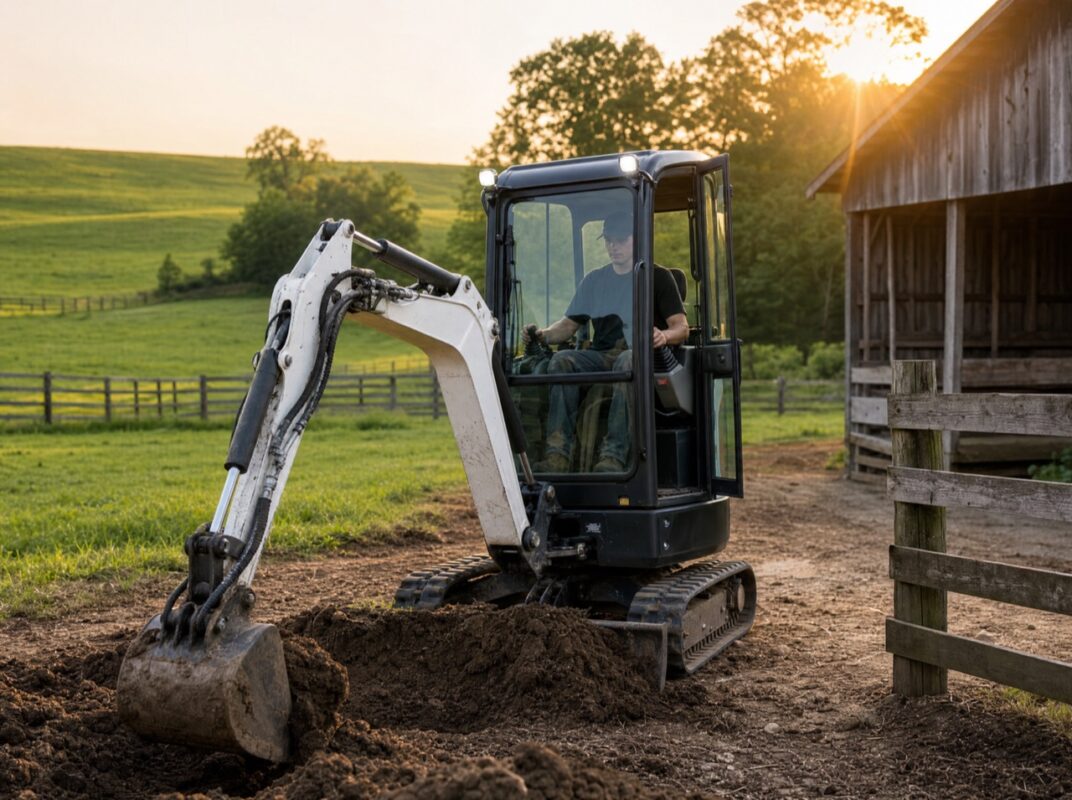
Mini excavators sit in a sweet spot for utility work. They are small enough to fit through a gate or between buildings, light enough to avoid tearing up an established yard, yet powerful enough to cut clean vertical-walled trenches several feet deep. Many run genuine Kubota diesel engines, which deliver steady hydraulic flow at low RPM, so you get smooth bucket control instead of jerky, soil-collapsing motions. That control is what separates a tidy trench from a crumbling ditch.
Compared with a trencher, an excavator gives you far more flexibility. A dedicated trencher cuts one fixed width and struggles in rocky or root-filled ground. With a mini excavator you can swap buckets, dig wider for a vault or junction box, undercut an obstacle, and backfill the trench when you are done, all with the same machine. For most homeowners, farmers, and contractors browsing our range of mini excavators, that versatility is the whole reason to own one.
Typical utility jobs that suit a mini excavator
- Water and irrigation supply lines
- Electrical conduit and direct-bury cable runs
- Sewer, septic, and drainage pipe
- French drains and footing drains
- Gas lines (where local code permits and after proper locating)
- Footings and shallow utility vaults
Choosing the right bucket and trench width
Trench width should follow the pipe or conduit, not the other way around. A trench that is too wide wastes time, soil, and backfill; one that is too narrow makes bedding and compaction impossible. For trenching with a mini excavator, a narrow trenching bucket, often 9 to 18 inches wide, is the workhorse. Reserve wider grading or ditching buckets for backfilling and finish work.
Quick width guidance
- Single small line (water, conduit): a 9 to 12 inch bucket usually leaves enough room to lay and bed the pipe.
- Multiple lines or larger pipe: step up to a 16 to 18 inch bucket so you can position and separate runs.
- Vaults, boxes, or splices: over-dig a pocket rather than widening the whole trench.
Bucket teeth matter too. Standard digging teeth bite into hard or rocky ground, while a smooth-edged grading bucket is better for cleaning trench bottoms and backfilling. Keeping a couple of bucket options on hand, available in our attachments selection, lets you switch as conditions change instead of fighting the wrong tool.
Call before you dig: locating underground utilities
This step is non-negotiable. Before any bucket touches the ground, call 811 (the national “Call Before You Dig” number in the US). Utility crews will mark existing gas, electric, water, sewer, and communication lines, usually within a few business days and at no cost to you. Striking a buried line can cause serious injury, electrocution, costly repairs, and legal liability.
- Place the locate request several days ahead, not the morning of the job.
- Respect the color-coded marks and the tolerance zone around them, typically 18 to 24 inches on each side.
- Within the tolerance zone, dig by hand or use soft excavation to expose lines.
- Re-mark or refresh locates if the job stretches past the marking’s expiration.
A step-by-step trenching workflow
Working in a consistent sequence keeps trench walls stable and your line straight. Here is a reliable order of operations.
- Plan the route. Mark the trench line with paint or string, noting depth changes, turns, and where the line ties in.
- Set your depth target. Know the required cover for your utility (electrical and water lines are commonly buried 18 to 24 inches or deeper; sewer depends on slope). Always confirm local code.
- Position the machine. Sit square to the trench line, lower the dozer blade for stability, and keep the cab over your tracks, not off to one side.
- Dig in passes. Take controlled bucket loads, curling at the bottom and lifting smoothly. Pull soil back over the tracks, not out to the side, so you stay balanced.
- Spoil management. Cast the dirt one to two feet back from the trench edge to prevent the wall from collapsing under the weight.
- Back the machine as you go. Dig, then crawl backward along the line so you are always working over undisturbed ground.
- Clean the bottom. Use a grading bucket or hand tools to true up the trench floor for proper pipe bedding and grade.
Maintaining grade and a clean trench bottom
Gravity utilities like sewer and drainage live or die by slope. A common target is roughly 1/4 inch of fall per foot for drainage pipe, but always follow the engineered or code-required grade for your project. Check it as you dig with a laser level, a builder’s level, or a string line and a level, rather than trusting your eye from the cab. Over-digging is harder to fix than leaving a little material, so sneak up on final depth.
For pressurized lines like water and conduit, a flat, debris-free bottom and clean sand or fine bedding protect the pipe from point loads and rocks. Take a few extra minutes to clear roots and stones; it prevents callbacks and future leaks.
Safety on every trenching job
Trenches are deceptively dangerous. Even shallow excavations can cave in, and operating a machine near an open trench adds its own hazards. Build these habits into every job.
- Never enter an unprotected trench deeper than about 4 to 5 feet. OSHA requires protective systems (sloping, benching, or shoring) at and beyond that depth, and conditions can demand it sooner.
- Keep spoil and the machine back from the edge to reduce surcharge load on the trench wall.
- Watch slope and soil type. Sandy or saturated soil collapses far more easily than packed clay.
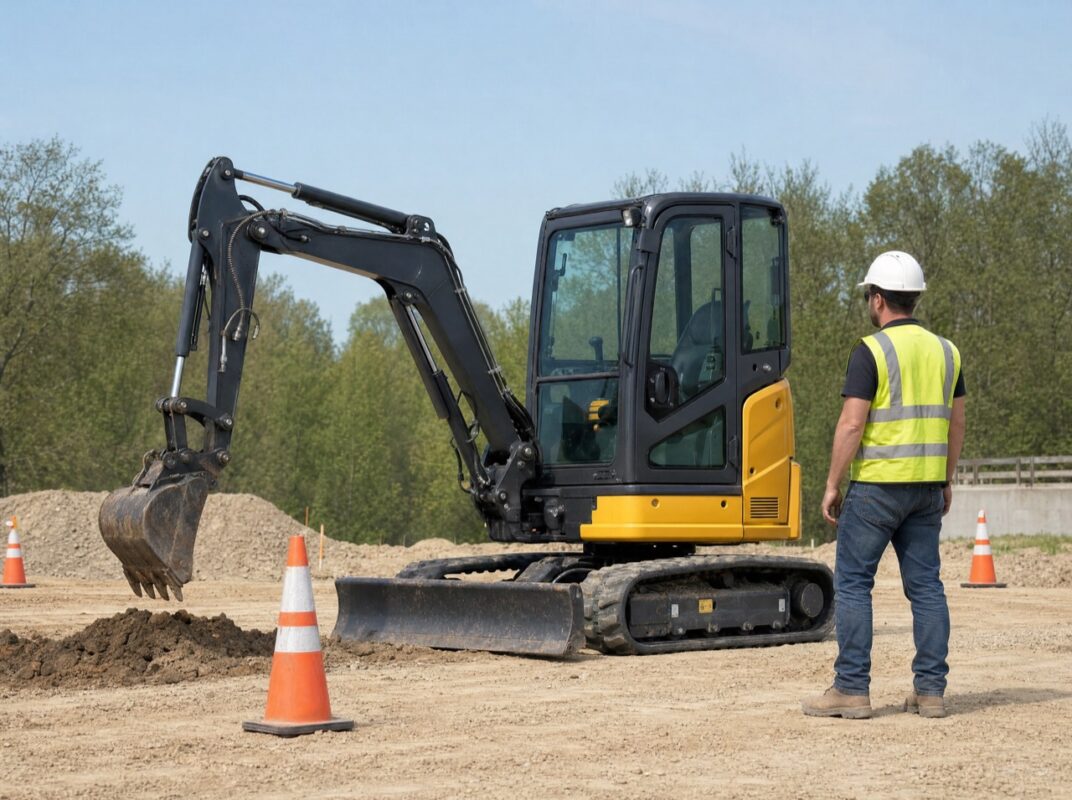
- Wear PPE and keep ground crew out of the swing radius of the boom.
- Set the parking brake and lower attachments before anyone approaches the machine.
Trenching and utility work FAQ
How deep can a mini excavator dig a trench?
It depends on the model’s maximum dig depth, which generally ranges from a few feet on the smallest machines to well over ten feet on larger compact units. For most residential and farm utility lines, a 1 to 3 ton mini excavator reaches typical burial depths comfortably. Check the spec sheet for the machine’s rated maximum digging depth and pick one with margin for your deepest run.
What size mini excavator do I need for utility trenching?
For light water and conduit work in tight yards, a 1 to 2 ton machine is often ideal because it fits through gates and leaves a light footprint. For deeper sewer lines, rocky ground, or production work, step up to a 3 to 6 ton machine for more reach, depth, and breakout force. If you are unsure, our team can help you match a machine to your jobs; reach out through our contact page or call +1 (213) 800 9299.
Can I backfill the trench with the same machine?
Yes. After the pipe is bedded and inspected, swap to a wider grading bucket or use the dozer blade to push spoil back into the trench in lifts, compacting as you go. Doing the dig, lay, and backfill with one machine is a major efficiency advantage over single-purpose trenchers.
The bottom line
Done right, trenching and utility work with a mini excavator is fast, precise, and surprisingly safe, as long as you locate utilities first, pick the correct bucket, hold your grade, and respect trench-wall hazards. A compact machine with a steady diesel powerplant gives you the control to cut clean trenches and the versatility to backfill when you are finished, all in a footprint that fits real-world job sites. When you are ready to put one to work, explore our full lineup of mini excavators or browse everything in the shop to find the right fit, backed by free freight to the lower 48 and direct technical support.