Blog
10 Mini Excavator Safety Tips Every Operator Should Know

Mini excavators earn their keep because they are compact, nimble, and surprisingly powerful for their size. That same power, paired with a tight working footprint, is exactly why mini excavator safety deserves real attention before you ever touch a lever. Whether you run one on a farm, a job site, or your own property, these ten practical tips will help you work faster, protect the people around you, and keep your machine in service for years.
1. Read the operator’s manual before your first dig
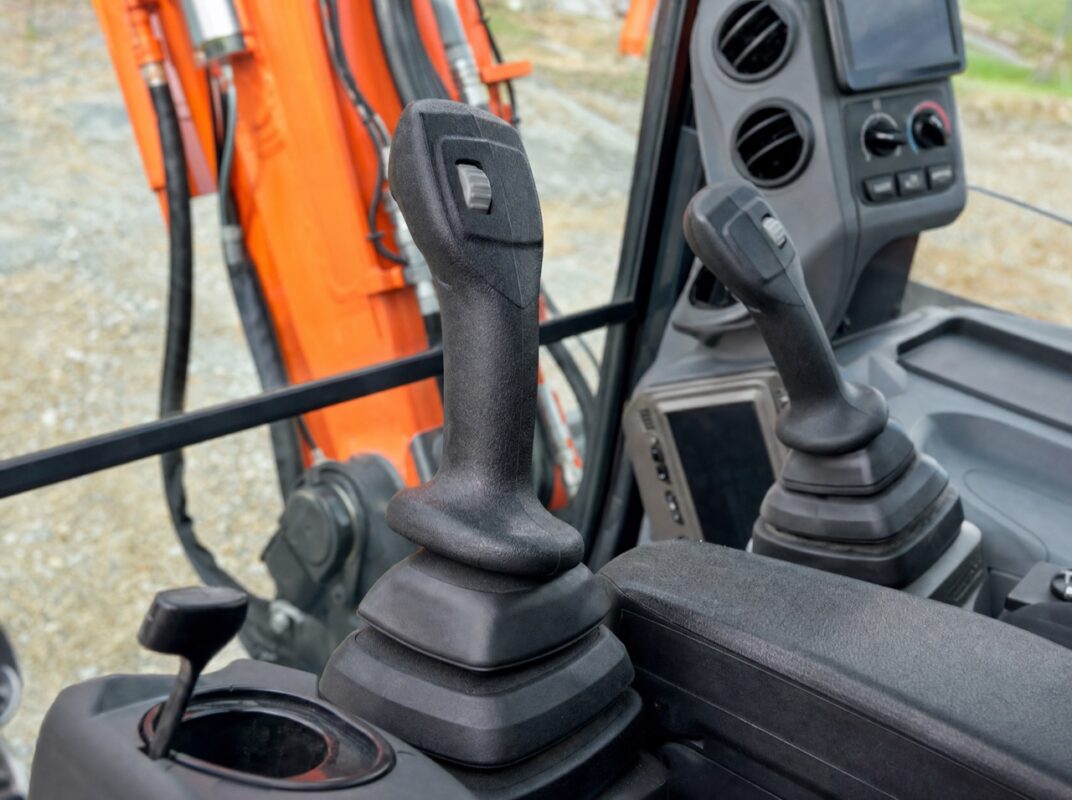
Every machine has its own controls, capacities, and quirks. The operator’s manual spells out lift charts, hydraulic settings, service intervals, and the meaning of every warning light on your dash. Skimming it once is not enough. Keep a copy in the cab and revisit it whenever you switch machines or add an attachment. If you buy from us, the manual ships with the equipment and our team is a phone call away at +1 (502) 286-8728 for anything that isn’t clear.
2. Walk around and inspect before every start
A two-minute pre-start inspection catches small problems before they become expensive or dangerous. Cold leaks, a loose track, or a cracked hose are far easier to deal with in the yard than mid-trench. Make this checklist a habit at the beginning of each shift:
- Check engine oil, coolant, and hydraulic fluid levels.
- Look under the machine for fresh oil or fuel leaks.
- Inspect tracks for proper tension, damage, or lodged debris.
- Confirm bucket teeth, pins, and the quick coupler are secure.
- Test lights, the horn, and the travel alarm.
- Clear the cab floor and clean the glass and mirrors.
- Verify the seat belt latches and retracts properly.
Many of these machines run a genuine Kubota diesel engine, and a quick fluid check is the single best thing you can do to protect that engine over its lifetime.
3. Always buckle the seat belt and use the ROPS cab
The rollover protective structure (ROPS) only works if you stay inside it, and you only stay inside it if you are belted in. A tip-over happens in a fraction of a second. Buckle up every time, even for a short move across the yard. Never disable, modify, or remove the ROPS, and never operate a machine whose protective structure has been damaged.
4. Call before you dig and locate utilities
Underground gas, electric, water, and fiber lines are the hidden hazard on almost every job. In the US, contact the national 811 service a few days before you break ground so utilities can mark their lines for free. Treat every marked line as live, hand-dig to expose it, and keep your bucket clear. Striking a buried line can cause injury, a costly outage, and serious liability.
5. Respect the swing radius and tail overhang
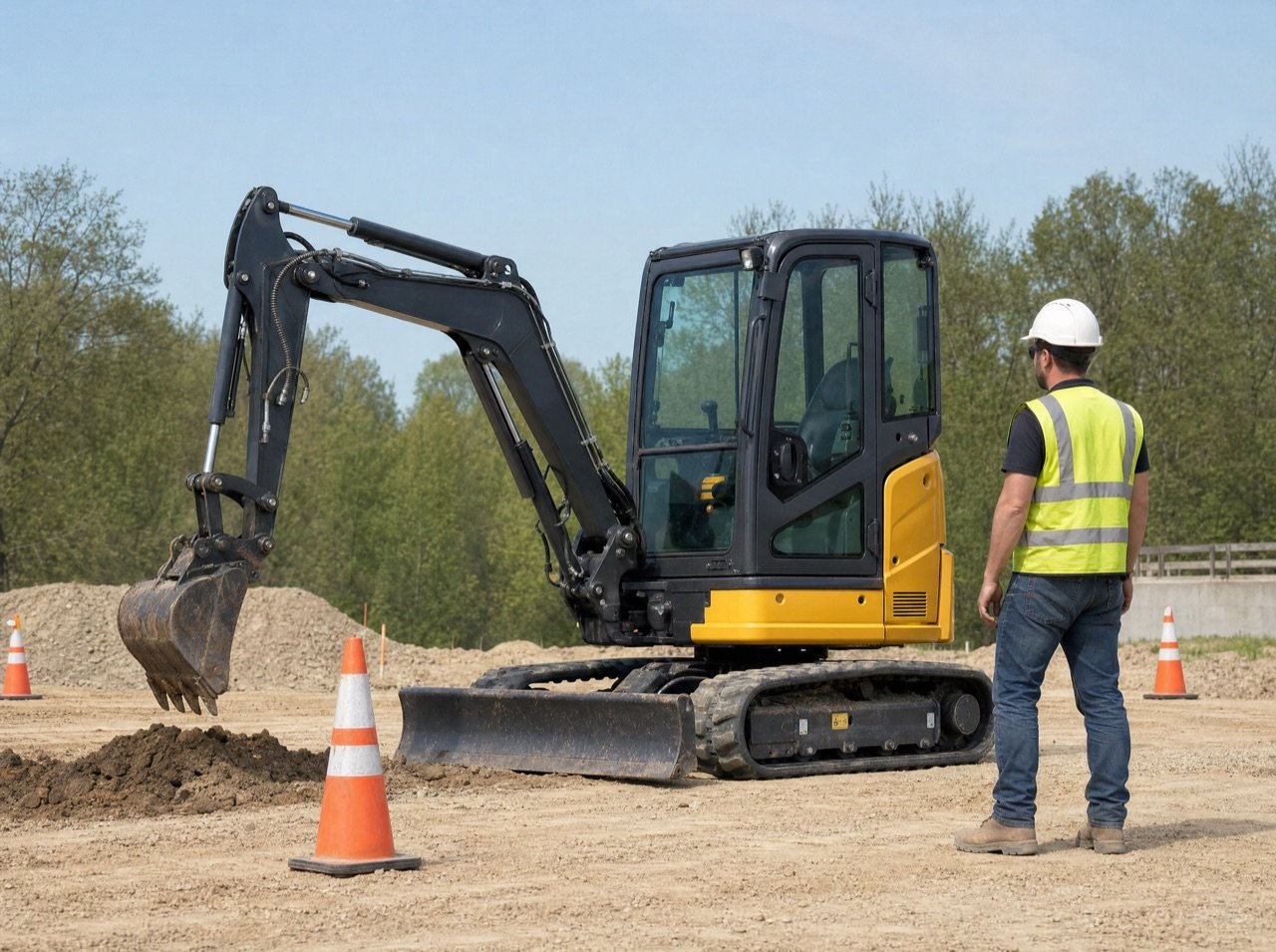
The most common mini excavator injuries involve the rear of the house swinging into a person or object. Even compact machines have a tail that sweeps as they rotate. Some models reduce this with a zero or near-zero tail-swing design, which is a real advantage in tight spaces, but no machine eliminates the pinch points entirely.
How to manage the swing zone
- Establish a clear no-go zone around the machine and enforce it.
- Make eye contact with ground workers before you rotate.
- Use a trained spotter and agreed hand signals in tight quarters.
- Swing smoothly and slow your rotation near walls and trenches.
If you’re shopping for a model that fits congested sites, our range of mini excavators includes compact and reduced-tail-swing options worth comparing.
6. Operate on slopes the smart way
Slopes are where stability is tested most. Travel up and down the grade rather than across it whenever possible, and keep the heavy end of the machine pointed uphill. Carry the bucket low to lower your center of gravity, avoid sudden swings, and never let the machine slide sideways. On loose or wet ground, reduce your load and your speed. If the slope exceeds the limit in your manual, find another approach.
7. Know your lift capacity and load the truck safely
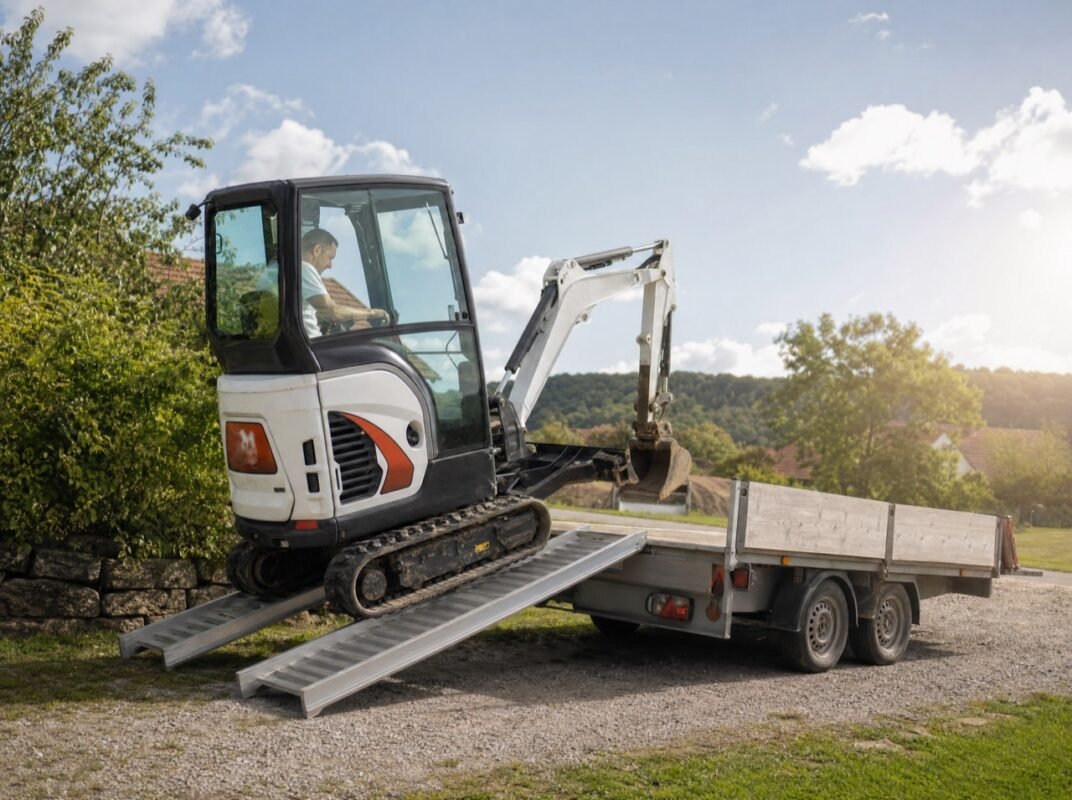
Trying to lift or place more than the machine is rated for invites a tip-over and overloads the hydraulics. Check the lift chart for your boom position and reach, because capacity drops sharply as the arm extends. When loading a trailer or truck:
- Position the machine on firm, level ground next to the bed.
- Keep loads low and close to the house while swinging.
- Swing over the bed, not over people or the cab of the truck.
- Lower loads gently rather than dropping them.
- Stay aware of overhead power lines and maintain safe clearance.
8. Mount, dismount, and shut down correctly
Many sprains and falls happen getting in and out, not while digging. Always face the machine and maintain three points of contact on the steps and grab handles. Before you leave the seat, lower the bucket or blade to the ground, set controls to neutral, engage any lock lever, and shut the engine down. Never leave a running machine unattended, and remove the key when you walk away.
9. Match the right attachment to the job
Augers, breakers, grapples, and thumbs expand what a mini excavator can do, but each one changes the weight, balance, and hydraulic demand at the end of the arm. Confirm the attachment is rated for your machine’s auxiliary hydraulic flow and that the coupler is fully locked before you put it to work. Browse compatible attachments by machine size, and call our team if you’re unsure about flow ratings or mounting.
10. Plan the site and stay aware of your surroundings
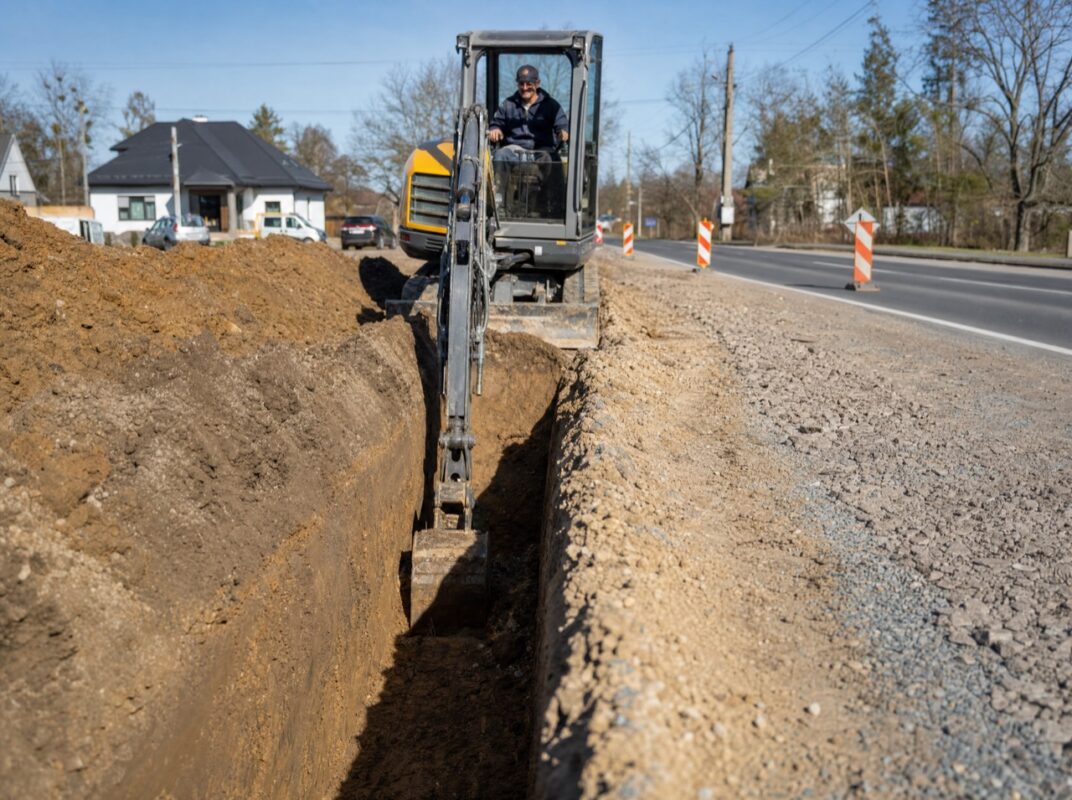
Good operators think two moves ahead. Walk the site first and look for soft ground, trench edges, traffic, overhead lines, and bystanders. Keep an open trench shored or sloped per local rules and never let anyone stand in an unprotected trench beside the machine. End each shift by parking on stable ground, away from edges and traffic.
A quick daily safety routine you can follow
Build mini excavator safety into a short, repeatable routine so nothing gets skipped on a busy day:
- Walk around and complete your pre-start inspection.
- Clear and mark the work area, including the swing zone.
- Confirm utilities are located before any digging.
- Buckle in, test controls, and warm the machine briefly.
- Work at a controlled pace, within the lift chart and slope limits.
- Shut down properly and park on level, stable ground.
Frequently asked questions
Do I need a license to operate a mini excavator?
For private property work, most US states do not require a special license, though a CDL may apply to towing heavy trailers on public roads. On commercial sites, OSHA expects operators to be trained and competent. Always check your local and job-site requirements before you start.
What is the most common mini excavator accident?
Two stand out: striking a buried utility line and crushing injuries from the swinging rear of the machine. Both are largely preventable by locating utilities first and enforcing a clear no-go zone around the swing radius.
How often should I service a mini excavator?
Follow the intervals in your operator’s manual, but a daily fluid and leak check plus regular greasing of pins and bushings goes a long way. Our machines include a one-year parts warranty with direct technical support, so help is available when a service question comes up.
The bottom line
Strong mini excavator safety is mostly about discipline: inspect before you start, respect the swing radius and lift chart, locate utilities, work slopes carefully, and shut down the right way every time. Master these habits and you’ll get more done with less risk and a longer-lasting machine. When you’re ready to put these tips to work, explore our full lineup of mini excavators or browse everything in the shop to find the right size for your site.