Blog
Understanding Mini Excavator Controls: ISO vs SAE Patterns

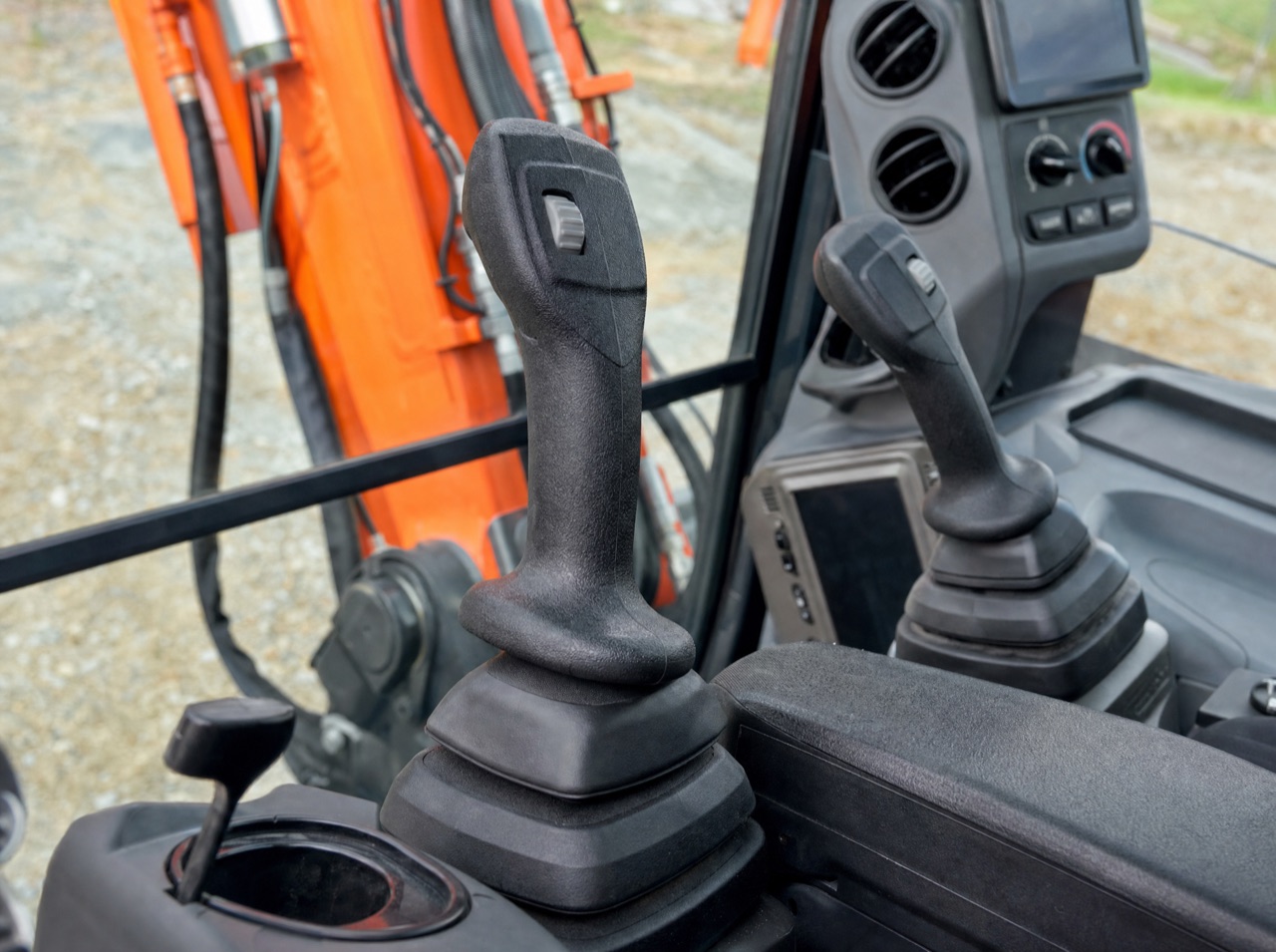
Understanding mini excavator controls is the single fastest way to become a safer, smoother, and more productive operator. Nearly every compact excavator sold in the United States ships with two control patterns: ISO and SAE. They move the same machine in completely different ways, and climbing into a cab set up the opposite of what you expect is a classic cause of jerky digging, near-misses, and damaged work. This guide breaks down both patterns in plain language so you know exactly what each joystick does before you ever lift the boom.
What control patterns actually are
A mini excavator has two hand joysticks, and between them they command four core functions: boom up/down, dipper (also called the arm or stick) in/out, bucket curl in/out, and house swing left/right. The “control pattern” simply defines which joystick and which direction is assigned to each of those four motions. Travel (the tracks) is handled separately by foot pedals or pull levers, so patterns only change how the upper machine moves, never how you drive it.
The two dominant standards are ISO (often called “excavator” or “Kubota/John Deere” style by operators) and SAE (often called “backhoe” style). The bucket and swing functions sit on the same sticks in both patterns. What flips between ISO and SAE is the relationship between the boom and the dipper.
ISO vs SAE mini excavator controls explained
Here is the core difference between ISO and SAE mini excavator controls, broken down stick by stick.
ISO pattern (excavator controls)
- Left joystick: forward/back moves the dipper (arm) out and in; left/right swings the house.
- Right joystick: forward/back lowers and raises the boom; left/right curls the bucket out and in.
ISO is the factory default on most modern compact excavators and is what the majority of dedicated excavator operators learn first. Many people find it intuitive because the right hand controls the “big” lifting motion of the boom alongside the bucket.
SAE pattern (backhoe controls)
- Left joystick: forward/back lowers and raises the boom; left/right swings the house.
- Right joystick: forward/back moves the dipper out and in; left/right curls the bucket.
SAE feels natural to anyone who grew up running a tractor-loader-backhoe, because it mirrors the lever layout of a traditional backhoe. Farmers, ranchers, and operators who cross-train between a backhoe and a mini excavator often prefer staying in SAE so their muscle memory carries over.
The short version: in both patterns the swing lives on the left stick side-to-side and the bucket lives on the right stick side-to-side. ISO puts the boom on the right stick and the arm on the left. SAE swaps those two, putting the boom on the left and the arm on the right.
Why the pattern matters for safety and productivity
Choosing the wrong pattern, or assuming a rented or shared machine matches your habits, is genuinely hazardous. If you reflexively pull a stick expecting the arm to come in and the boom drops instead, you can swing a loaded bucket toward a coworker, strike a wall, or tip a load. On a job near trenches, traffic, or utilities, that split-second mismatch matters.
The flip side is productivity. When the pattern matches your trained instincts, you blend boom, arm, bucket, and swing into one fluid motion instead of moving each function separately. Smooth, simultaneous control is what separates a clean trench wall and a fast load cycle from a choppy, slow dig. Sticking with one consistent pattern across your fleet pays off every single day. If you are building out a fleet, our full lineup of mini excavators ships with selectable patterns so every operator can run their preferred layout.
How to switch between ISO and SAE patterns
Most modern compact excavators let you change patterns with a selector valve, usually a simple lever or knob mounted under the cab seat or beside the operator station. Older or budget machines may require swapping hydraulic lines, which is a job for a qualified technician. Always confirm the method in your machine’s operator manual before attempting a change.
Follow this checklist every time you switch patterns or step onto an unfamiliar machine:
- Park on level ground, lower the bucket flat to the dirt, and engage the safety lock lever before doing anything else.
- Locate the pattern selector valve (commonly under the seat) and confirm the manual’s label for the ISO and SAE positions.
- Move the selector fully into the desired position. Half-engaged valves can cause unpredictable response.
- Restart and let the hydraulics warm, keeping the work area clear of people.
- Test every function slowly at low RPM: boom up/down, arm in/out, bucket curl, and swing both directions.
- Verify each joystick motion matches the pattern you intended before doing real work.
- Tell anyone else operating the machine which pattern it is set to, and label it if you share the equipment.
That two-minute verification routine prevents the overwhelming majority of pattern-related mistakes.
Which pattern should you choose?
There is no universally “correct” pattern; the best one is the pattern your operators already know. A few practical guidelines:
- New to digging entirely? Learn ISO. It is the modern default, it transfers to most rental and full-size excavators, and most instructional resources assume it.
- Coming from a backhoe? SAE will feel immediately familiar and reduce your learning curve.
- Running a mixed crew? Standardize on one pattern across your machines, train everyone the same way, and clearly label any shared unit.
Whatever you pick, consistency beats preference. An operator who never has to second-guess the controls is a safer and faster operator, and that consistency also protects the attachments you invest in. If you run a range of buckets, augers, or grapples, matching a reliable pattern keeps swaps between attachments predictable and your cycle times tight.
Frequently asked questions
Can I damage my mini excavator by switching control patterns?
No. The selector valve is designed to change patterns, so using it as intended causes no harm. The real risk is operator error after a switch, which is why the slow function-by-function test before working is so important. If your machine needs hydraulic lines re-plumbed instead of a valve, have a qualified technician handle it.
Is ISO or SAE better for a beginner?
For a true beginner with no backhoe background, ISO is usually the smarter starting point because it is the industry default and carries over to most other excavators you may rent or operate later. If you already run a backhoe, SAE will feel more natural from day one.
Do the tracks and travel controls change with the pattern?
No. Control patterns only affect the boom, arm, bucket, and swing on the hand joysticks. Travel is handled by separate foot pedals or hand levers and stays the same regardless of whether you run ISO or SAE.
The bottom line
Knowing your mini excavator controls cold, and confirming whether the machine is set to ISO or SAE before you dig, is one of the most basic and important habits an operator can build. The two patterns swap the boom and arm functions, both keep swing and bucket where they are, and a quick low-RPM function check after any switch keeps you safe and smooth. When you are ready for a machine that lets every operator run their preferred pattern, explore our compact mini excavators or browse the full catalog in our online store to find the right fit for your crew.